

@randyc
active 2 days, 15 hours ago
by RandyC

I Don’t Want Gold
September 13, 2026 in Encouragement
The world has nothing to offer
that compares to what You’ve already given
Forgiveness, peace and joy fill my life
Worry has fled
and fear doesn't control me anymore
Out of all the beautiful places on earth
I’ve found that with You is where I want to live forever
In the north, in the south, it doesn't matter
as long as I’m with You
With plenty or little, I don’t care, I’ll lean on You
I lack nothing; Hallelujah!
I don’t need to search anymore; Hallelujah!
Sin doesn’t control me anymore; Hallelujah!
So I will sing from my heart - It’s enough to be Your son!
You’ve changed everything, You’ve changed my name
You’ve became a Father for me
No longer an orphan, neither lost, nor a slave
but free as a bird
I’m dead to sin and born again, clean as a baby
It’s enough for me, enough for me to be Your son
It’s enough for me, enough for me to be Yours
I don’t want gold, I don’t want fame
I would give up much more, just to be called Your son
by RandyC

A New Religion
September 18, 2025 in Just Thinking...
- No one tears a piece from a new garment and puts it on an old garment. If he does, he will tear the new, and the piece from the new will not match the old.
- And no one puts new wine into old wineskins. If he does, the new wine will burst the skins and it will be spilled, and the skins will be destroyed. But new wine must be put into fresh wineskins.
- And no one after drinking old wine desires new, for he says, “The old is better.” (Luke 5:36–39)
“In almost unanimous consent, interpreters and commentators have agreed that the old wine, old wineskins and the old coat are all symbols of Judaism and Law whereas the new wine and the new coat are symbols of Christianity and Grace.”
The problem with the interpretation is the closing line of Luke 5:39, “No one, after drinking old wine wishes for new; for he says, ‘The old is good’” (or “the old is better”). This troublesome verse is found only in Luke’s version of the double parable, and even then the Western version of the text omits it. It creates a serious problem for the interpretation because it seems to reverse the value assigned to the new wine. If the gospel is represented by the new wine, then the statement and even the entire metaphor is ridiculous in Yeshua’s mouth. It is “as if Yeshua was comparing Judaism to good claret and the gospel to cheap plonk”
Recognizing that the interpretation is flawed, several scholars have made valiant attempts to reinterpret the double parable in a manner consistent with the rest of the Gospels. R.S. Good (1983) and David Flusser (1979), for example, both explain the words “the old is better” by reversing the direction of the entire double parable in Luke. According to R. S. Good, Luke intentionally reinterpreted the two parables to mean that the old is better because it is the old Israel that Yeshua has come to save.
I am excited about this interpretation, the Pharisees were adding to the Law with all of their “traditions of man”, adding their new yoke to what God had told Moses. They were adding their patchwork to the old coat!
Jesus is telling the parables to judgemental Pharisees:
The Pharisees and their scribes began grumbling at His disciples, saying, “Why do you eat and drink with the tax collectors and sinners?” And Jesus answered and said to them, “It is not those who are well who need a physician, but those who are sick. “I have not come to call the righteous but sinners to repentance.” And they said to Him, “The disciples of John often fast and offer prayers, the disciples of the Pharisees also do the same, but Yours eat and drink.”
(Luk 5:30-33 NASB)
Therefore it seems, it was the Pharisees that had invented a “new” covenant and a “new” religion, with their fasts and other “customs”, and Jesus had come to set things back on the original “old” course.
The 3 quotes above were paraphrased from an article on the topic that I enjoyed, but didn’t agree with the conclusion.
by RandyC

A God Fearer and Centurion of the Italian Cohort
July 6, 2025 in Book Reviews, Going Deeper...
There was a man at Caesarea, a centurion of what was called the Italian cohort, a devout man and one who feared God with all his household, and gave many alms to the people and prayed to God continually. – Acts 10
Everyone has always hated the Jews
I had always been taught that it is common knowledge, “everyone has always hated the Jews!”. But while I was researching “Fourteenthers“, I saw a book recommendation that pointed out the many instances of God-fearing gentiles in the New Testament writings.
In Capernaum, some Jewish elders came to Jesus, asking Him to come and save the life of a centurion’s slave, they earnestly implored Him, saying, “He is worthy for You to grant this to him; for he loves our nation and it was he who built us our synagogue. – Luke 7
Now when the meeting of the synagogue had broken up, many of the Jews and of the God-fearing proselytes followed Paul and Barnabas, who, speaking to them, were urging them to continue in the grace of God. The next Sabbath nearly the whole city assembled to hear the word of the Lord. – Acts 13
A woman named Lydia, from the city of Thyatira, a seller of purple fabrics, a worshiper of God, was listening; and the Lord opened her heart to respond to the things spoken by Paul. – Acts 16
And some of them were persuaded and joined Paul and Silas, along with a large number of the God-fearing Greeks and a number of the leading women. – Acts 17
So he was reasoning in the synagogue with the Jews and the God-fearing Gentiles, and in the market place every day with those who happened to be present. – Acts 17
And he was reasoning in the synagogue every Sabbath and trying to persuade Jews and Greeks. – Acts 18
So Paul left the synagogue and went next door to the house of Titus Justus, a worshiper of God. – Acts 18
The Origins of Anti-Semitism
This book has made a major shift in my thinking when reading the New Testament.
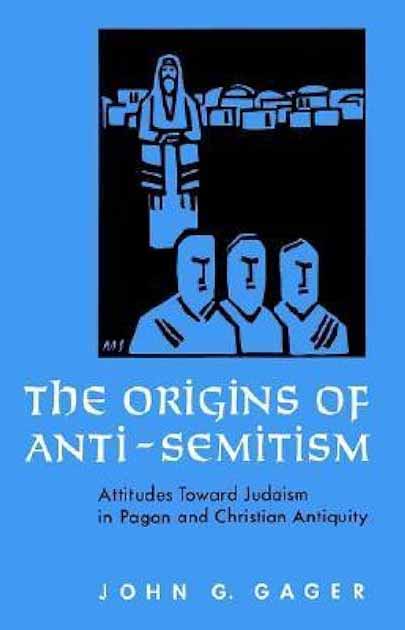 This is a “text book” and not an easy read; there are no pictures, no graphics, just text. I had to get used the term pagan being used so matter-of-factly by scholars of religion. As far as they are concerned there are three people groups in antiquity; Jews, Christians and pagans.
I learned that for hundreds of years before Jesus was born, Judaism and Moses had been appealing and respected among the pagans, especially the antiquity and continuity of the faith. The writings of Moses were so respected, that Western Christianity felt forced to resort to anti-semitism to lend validity to their movement.
I realized that I had thought that replacement theology had evolved over centuries as well as anti-nominism. I see in the New Testament that some saw both Jesus and Paul as anti-nomian, but I had no idea Western Christianity had developed an anti-Moses doctrine so early.
“Certainly for Christianity
in it’s early stages,
the real debate was never
between Christians and Jews
but among Christians.
– Origins of Anti-Semitisim
While I was reading it I ended up at a fellowship that was seeking unity and they were in the middle of a study of the book of Romans. Because of my new outlook, it seemed to me that Paul’s letter could be a diatribe against the disunity between two factions, it seems that the Gentile Christians had already begun talking of replacement theology.
|
The Origins of Anti-Semitism: Attitudes toward Judaism in Pagan and Christian Antiquity |
| by John G. Gager | |
| Year Written: 1983 | |
| New York : Oxford University Press | |
| ISBN – 0195036077 |
by RandyC

Early Christianity: The Nazoraeans
February 22, 2025 in Just Thinking...
I have been stuck in an “Early Christianity” rabbit hole lately and I keep running into mentions of these “Nazoraeans”. But finally I have stumbled upon a couple of good contemporary writings from antiquity.
My favorite sources are those written as close to the time of the thing I am researching as possible, now I realize that even better are sources not only written at the time, but these, that are written by the enemies of the “sect” that I am researching!
In 375 AD, Epiphanius, the bishop of Salamis, wrote Panarion (Against Heresies). One of the sects included is the Nazoraeans, Epiphanius does an in-depth sketch of them and their beliefs in his time.
In this essay, Epiphanius mentions an incident in Paul’s life that I had been looking at in Acts 24. In about 60 AD, Paul is accused of being “a ringleader of the sect of the Nazarenes”, in his defense Paul says, “But this I admit to you, that according to the Way which they call a sect [heresy in KJV] I do serve the God of our fathers, believing everything that is in accordance with the Law and that is written in the Prophets; having a hope in God, which these men cherish themselves, that there shall certainly be a resurrection of both the righteous and the wicked.”
The Nazoraeans that Epiphanius describes sound very similar to what Paul says of his own beliefs in Acts 24.
And in 404 AD, revered church father Jerome, while living in Bethlehem writes in a letter to Augustine how the Nazarenes are worshiping throughout all the synagogues of the East, and the way he describes them they sound like the same sect of believers:
“The matter in debate, therefore, or I should rather say your opinion regarding it, is summed up in this: that since the preaching of the gospel of Christ, the believing Jews do well in observing the precepts of the law, i.e. in offering sacrifices as Paul did, in circumcising their children, as Paul did in the case of Timothy, and keeping the Jewish Sabbath, as all the Jews have been accustomed to do. … In our own day there exists a sect among the Jews throughout all the synagogues of the East, which is called the sect of the Minei, and is even now condemned by the Pharisees. The adherents to this sect are known commonly as Nazarenes; they believe in Christ the Son of God, born of the Virgin Mary; and they say that He who suffered under Pontius Pilate and rose again, is the same as the one in whom we believe. But while they desire to be both Jews and Christians, they are neither the one nor the other.” – https://www.newadvent.org/fathers/1102075.htm
Epiphanius says that he doesn’t know if they believe that Jesus is the son of God or not. But, he thinks they are a stinging insect that is small, and yet causes pain with its poison—and need to be squashed.
If they believe that Jesus is the Christ and that He and the Father are one, WHY all the hatred?
Doesn’t Jesus say “for whoever is not against us is for us.”?
I have decided that I can say at this point, just like Paul did, that “I am a Nazoraean”, and “I admit to you, that according to the Way which they call a sect I do serve the God of our fathers, believing everything that is in accordance with the Law and that is written in the Prophets and having a hope in God”
The translation of Epiphanius below is by Frank Williams, published in 2009, his footnotes are included. Williams believes that this essay “seems to be based on Epiphanius’ personal knowledge, though the history seems conjectured from passages in scripture and Eusebius.” –
The Panarion: A Treatise Against Eighty by Epiphanius of Salamis
Against the Nazoraeans1
1:1 Next after these come the Nazoraeans, at the same time as they or even before them—either together with them or after them, in any case their contemporaries. I cannot say more precisely who succeeded whom. For, as I said, these were contemporary with each other, and had ideas similar to each other’s.
1:2 For these people did not give themselves the name of Christ2 or Jesus’ own name, but that of ‘Nazoraeans.’
1:3 But at that time all Christians alike were called Nazoraeans. They also came to be called ‘Jessaeans’3 for a short while, before the disciples began to be called Christians at Antioch.
1:4 But they were called Jessaeans because of Jesse, I suppose, since David was descended from Jesse and Mary was a lineal descendant of David. This was in fulfilment of sacred scripture, since in the Old Testament the Lord tells David, ‘Of the fruit of thy belly shall I set upon thy throne.’
2:1 I am afraid of drawing the treatment of every expression out too long and so, though the truth moves me to touch on the considerations for contemplation in every expression, I give this note in brief, not to go to great length in giving the explanation.
2:2 Since the Lord said to David, ‘Of the fruit of thy belly shall I set upon the throne,’ and, ‘The Lord sware unto David and will not repent,’4 it is plain that God’s promise is irrevocable.
2:3 In the first place, what does God have to swear by but ‘By myself have I sworn, saith the Lord?’6 —for ‘God hath no oath by a greater.’6 The divine does not swear, however, but the statement has the function of providing confirmation. For the Lord swore to David with an oath that he would set the fruit of his belly upon his throne.
2:4 And the apostles bear witness that Christ had to be born of David’s seed, as our Lord and Saviour Jesus Christ indeed was. I shall pass over the vast number of testimonies, in order, as I said, not to drag the discussion out to great length.
2:5 But probably someone might say, ‘Since Christ was physically born of David’s seed, that is, of the Holy Virgin Mary, why is he not sitting on David’s throne? For the Gospel says, ‘They came that they might anoint him king, and when Jesus perceived this he departed … and hid himself in Ephraim, a city of the wilderness.’ ‘7
2:6 But now that I have gotten to this passage and am asked about this text and the reason why the prophecy about sitting on David’s throne has not been fulfilled physically in the Saviour’s case—for some have thought that it has not—I shall still say that it is a fact. No word of God’s holy scripture comes to nothing.
3:1 For David’s throne and kingly seat is the priesthood in the holy church. The Lord has combined this kingly and high priestly rank and conferred it on his holy church by transferring David’s throne to it, never to fail.
3:2 In time past David’s throne continued by succession until Christ himself, since the rulers from Judah did not fail until he came ‘for whom are the things prepared, and he is the expectation of the nations,’8 as scripture says.
3:3 For the rulers in succession from Judah came to an end with Christ’s arrival. Until he came the rulers were anointed priests,9 but after his birth in Bethlehem of Judea the order ended and was altered10 in the time of Alexander, a ruler of priestly and kingly stock.
3:4 This position died out with this Alexander from the time of Salina also known as Alexandra, in the time of King Herod and the Roman emperor Augustus. (Though this Alexander was crowned also, as one of the anointed priests and rulers.11
3:5 For when the two tribes, the kingly and priestly, were united—I mean the tribe of Judah with Aaron and the whole tribe of Levi—kings also became priests, for nothing hinted at in holy scripture can be wrong.)12
3:6 But then finally a gentile, King Herod, was crowned, and not David’s descendants any more.
3:7 But with the transfer of the royal throne the rank of king passed, in Christ, from the physical house of David and Israel to the church.13 The throne is established in God’s holy church forever, and has both the kingly and the high-priestly rank for two reasons.
3:8 It has the kingly rank from our Lord Jesus Christ, in two ways: because he is physically descended from King David, and because he is in fact a greater king from all eternity in virtue of his Godhead. But it has the priestly rank because Christ himself is high priest and the founder of the office14 of the high priests
3:9 since James, who was called the Lord’s brother and who was his apostle, was immediately15 made the first bishop.16 He was Joseph’s son by birth, but was ranked as the Lord’s brother because of their upbringing together.
4:1 For this James was Joseph’s son by Joseph’s first wife,17 not by Mary, as I have said in many other places18 and dealt with more clearly for you.
4:2 And moreover I find that he was of Davidic descent because of being Joseph’s son, and that he was born a Nazirite—for he was Joseph’s first-born, and (thus) consecrated.19 And I have found further that he also functioned as (high)-priest in the ancient priesthood.20
4:3 Thus he was permitted to enter the Holy of Holies once a year, as scripture says the Law directed the high priests to do. For many before me—Eusebius, Clement and others—have reported this of him.
4:4 He was allowed to wear the priestly tablet21 besides, as the trustworthy authors I mentioned have testified in those same historical writings.
4:5 Now our Lord Jesus Christ, as I said, is ‘priest forever after the order of Melchizedek,’22 and at the same time hereditary king, so that he may transfer the priesthood along with the lawgiving.
4:6 And since David’s seed, through Mary, is seated on the throne, his throne endures forever and of his kingdom there shall be no end. He should now transfer the order of the former kingship; for indeed his kingdom is not earthly, as he said to Pontius Pilate in the Gospel, ‘My Kingdom is not of this world.’23
4:7 For since Christ brings to fulfilment24 all the things (that have been said) in riddles, the preliminaries have reached a limit. For he who is always king did not come to achieve sovereignty. He granted the crown to those whom he appointed—lest it be thought that he advanced from a lower estate to a higher.
4:8 For his throne endures, of his kingdom there shall be no end, and he is seated on the throne of David and has transferred David’s kingship and granted it, together with the high priesthood, to his own servants, the high priests of the catholic church.
4:9 And there is much to say about this. But in any case, since I have come to the topic of the reason why those who had come to faith in Christ were called Jessaeans before they were called Christians, we said that Jesse was the father of David. And they had been named Jessaeans, either because of this Jesse; or from the name or our Lord Jesus since, being his disciples, they were derived from Jesus; or because of the etymology of the Lord’s name. For in Hebrew Jesus means ‘healer’ or ‘physician,’25 and ‘saviour.’
4:10 In any case, they had got this name before they were called Christians. But at Antioch, as I have mentioned before and as is the essence of the truth, the disciples and the whole church of God began to be called Christians.
5:126 If you enjoy study and have read the passage about them in Philo’s historical writings, in his book entitled ‘Jessaeans,’ you can find that, in giving his account of their way of life and their hymns and describing their monasteries in the vicinity of the Marean marsh, Philo described none other than Christians.27
5:2 For when he visited the area—the place is called Mareotis—and was entertained by them at their monasteries in the region, he was edified.
5:3 He arrived there during Passover and observed their customs, and how some of them put off (eating) throughout the holy week of Passover, though others ate every other day and others, indeed, each evening.28 But all this has been written by Philo on the subject of the Christians’ faith and regimen.
5:4 So when they were called Jessaeans then shortly after the Saviour’s ascension and after Mark had preached in Egypt,29 in those times certain other persons, supposed followers of the apostles, seceded in their turn. I mean the Nazoraeans, whom I am discussing here. They were Jewish, were attached to the Law, and had circumcision.
5:5 But it was as though people had seen fire under a misapprehension. Not understanding why, or for what use, the persons who had kindled this fire were doing it—either to cook their rations with the fire, or burn some dead trees and brush, which are usually destroyed by fire—they kindled fire too, in imitation, and set themselves ablaze.
5:6 For by hearing just Jesus’ name, and seeing the miracles performed by the hands of the apostles, they came to faith in Jesus themselves. And since they found that he had been conceived at Nazareth and brought up in Joseph’s home, and for this reason is called ‘Jesus the Nazoraean’ in the Gospel—as the apostles say, ‘Jesus the Nazoraean, a man approved by signs and wonders,’30 and so on—they adopted this name, so as to be called Nazoreans.
5:7 Not ‘Nazirites’—that means ‘consecrated persons.’ Anciently this rank belonged to firstborn sons and men who had been dedicated to God. Samson was one, and others after him, and many before him. Moreover, John the Baptist too was one of these same persons who were consecrated to God, for ‘He drank neither wine nor strong drink.’31 (This regimen, an appropriate one for their rank, was prescribed for such persons.)
6:1 They did not call themselves Nasaraeans either; the sect of Nasaraeans was before Christ and did not know Christ.
6:2 But besides, as I have indicated, everyone called the Christians Nazoraeans, as they say in accusing Paul the apostle, ‘We have found this man a pestilent fellow and a perverter of the people, a ring-leader of the sect of the Nazoraeans.’32
6:3 And the holy apostle did not disclaim the name—not to profess these people’s heresy, but he was glad to own the name his adversaries’ malice had applied to him for Christ’s sake.
6:4 For he says in court, ‘They neither found me in the temple disputing with any man, neither raising up the people, nor have I done any of those things whereof they accuse me. But this I confess unto thee, that after the way which they call heresy, so worship I, believing all things in the Law and the prophets.’33
6:5 And no wonder the apostle admitted to being a Nazoraean! In those days everyone called Christians this because of the city of Nazareth—there was no other usage of the name at the time. And so people gave the name of ‘Nazoraeans’ to believers in Christ, of whom it is written, ‘because he shall be called a Nazoraean.’34
6:6 Even today in fact, people call all the sects, I mean Manichaeans, Marcionites, Gnostics and others, by the common name of ‘Christians,’ though they are not Christians. However, although each sect has another name, it still allows this one with pleasure, since the name is an ornament to it. For they think they can preen themselves on Christ’s name—certainly not on Christ’s faith and works!
6:7 Thus Christ’s holy disciples too called themselves ‘disciples of Jesus’ then, as indeed they were. But when others called them Nazoraeans they did not reject it, being aware of the intent of those who were calling them that. They were calling them Nazoraeans because of Christ, since our Lord Jesus was called ‘the Nazoraean’ himself—as the Gospels and the Acts of the Apostles say—
6:8 because of his upbringing in the city of Nazareth (now a village) in Joseph’s home, after having been born in the flesh at Bethlehem, of the ever-virgin Mary, Joseph’s betrothed. For Joseph had settled in Nazareth after leaving Bethlehem and taking up residence in Galilee.
7:1 But these same sectarians whom I am discussing here disregarded the name of Jesus, and neither called themselves Jessaeans, kept the name of Jews, nor termed themselves Christians—but ‘Nazoraeans’ supposedly from the name of the place ‘Nazareth.’ But they are Jews in every way and nothing else.
7:2 They use not only the New Testament but the Old Testament as well, as the Jews do. For they do not repudiate the legislation, the prophets, and the books which are called Writings by the Jews and by themselves. They have no different views but confess everything in full accord with the doctrine of the Law and like the Jews, except that they are supposedly believers in Christ.
7:3 For they acknowledge both the resurrection of the dead and that all things have been created by God,35 and they declare that God is one, and that his Son is Jesus Christ.
7:4 They are perfectly versed in the Hebrew language, for the entire Law, the prophets, and the so-called Writings—I mean the poetic books, Kings, Chronicles, Esther and all the rest—are read in Hebrew among them, as of course they are among the Jews.
7:5 They are different from Jews, and different from Christians, only in the following ways. They disagree with Jews because of their belief in Christ; but they are not in accord with Christians because they are still fettered by the Law—circumcision, the Sabbath, and the rest.36
7:6 As to Christ, I cannot say whether they too are misled by the wickedness of Cerinthus and Merinthus, and regard him as a mere man—or whether, as the truth is, they affirm that he was born of Mary by the Holy Spirit.
7:7 This sect of Nazoraeans is to be found in Beroea37 near Coelesyria, in the Decapolis near Pella, and in Bashanitis at the place called Cocabe38—Khokhabe in Hebrew.
7:8 For that was its place of origin, since all the disciples had settled in Pella after their remove from Jerusalem—Christ having told them to abandon Jerusalem and withdraw from it39 because of the siege it was about to undergo. And they settled in Peraea for this reason and, as I said, lived their lives there. It was from this that the Nazoraean sect had its origin.
8:1 But they too are wrong to boast of circumcision, and persons like themselves are still ‘under a curse,’40 since they cannot fulfil the Law. For how will they be able to fulfil the Law’s provision, ‘Thrice a year thou shalt appear before the Lord thy God, at the feasts of Unleavened Bread, Tabernacles and Pentecost,’41 on the site of Jerusalem?
8:2 For since the site is closed off,42 and the Law’s provisions cannot be fulfilled, it must be plain to anyone with sense that Christ came to be the fulfiller of the Law—not to destroy the Law but to fulfil the Law—and to lift the curse that had been pronounced on transgression of the Law.
8:3 For after Moses had given every commandment he came to the end of the book and ‘included the whole in a curse’43 by saying, ‘Cursed is he that continueth not in all the words that are written in this book to do them.’44
8:4 Hence Christ came to free what had been fettered with the bonds of the curse by granting us, in place of the lesser commandments which cannot be fulfilled, ones which are greater and which are not inconsistent with the completion of the task as the former ones were.
8:5 For often in every Sect, when I reached the point, I have explained in connection with the Sabbath, circumcision and the rest, how the Lord has granted us something more perfect.
8:6 But how can people like these be defensible since they have not obeyed the Holy Spirit who said through the apostles to gentile converts, ‘Assume no burden save the necessary things, that ye abstain from blood, and from things strangled, and fornication, and from meats offered to idols?’45
8:7 And how can they fail to lose the grace of God, when the holy apostle Paul says, ‘If ye be circumcised, Christ shall profit you nothing …. whosoever of you do glory in the Law are fallen from grace?’46
9:1 In this Sect too, my brief discussion will be sufficient. People of their kind are refutable at once and easy to detect and, rather (than being heretical Christians), are Jews and nothing else.
9:2 Yet to the Jews they are very much enemies. Not only do Jewish people bear hatred against them; they even stand up at dawn, at midday, and toward evening, three times a day when they recite their prayers in the synagogues, and curse and anathematize them—saying three times a day, ‘God curse the Nazoraeans.’47
9:3 For they harbour a further grudge against them, if you please, because despite their Jewish origin, they preach that Jesus is the Christ—something that is the opposite of those who are still Jews and have not accepted Jesus.
9:4 They have the Gospel according to Matthew in its entirety in Hebrew.48 For it is clear that they still preserve this as it was originally written, in the Hebrew alphabet. But I do not know whether they have also excised the genealogies from Abraham till Christ.
9:5 But now that we have also detected this sect—like a stinging insect that is small, and yet causes pain with its poison—and have squashed it with the words of the truth, let us go on to the next, beloved, praying for help from God.
1 – See p. 47 n. 27. This Sect seems to be based on Epiph’s personal knowledge, though he has conjectured its history from passages in scripture and Eusebius.
2 – Eusebius, at H. E. 2.17.4 says that the first Christians were not everywhere known as such.
3 – Epiphanius bases this on his memory of the term Ἐσσαῖοι which Philo uses at Vita Contemplativa 1 for the group Eusebius calls Therapeutae. On the subject see Pourkier p. 113.
4 – Ps 109:4
5 – Gen 22:16
6 – Cf. Heb 6:13.
7 – Cf. John 6:15; 11:54.
8 – Gen 49:10
9 – Cf. Jer. Chron. 160,16-17 (Helm).
10 – Cf. Eus. Chron. 61,12-14 (Karst); Jer. Chron. 148,6-8 (Helm). Eusebius’ Chronicle might be the source of Epiphanius’ explanation.
11 – Another version of this is found at Jer. Chron. 148,11-14 (Helm).
12 – This might have come from Orig. Hom. in Sam. Frgt. 4 (Klostermann, SC 3, p. 296) καταγνοὺς οῦν τοῦ Σαοὺλ καὶ βουλόμενος τῷ Δαυὶδ τὰ τῆς ἀρχῆς καὶ τῷ σπέρματι αὐτοῦ φυλᾶξαι τὴν βασιλείαν διὰ τὸν ἐξ αὐτοῦ τεχθησόμενον κατὰ σάρκα βασιλέα τῆς κτίσεως ἁπάσης
13 – The substance of this argument appears at a Justin Apol. 32.1-3; Dial. 11.4; 52.2-4; 120.3-5; 126.1; Iren. 4.10.2; Eus. H. E. 1.6.1-2; 4; 8; Demonstratio 7.
14 – πρύτανις
15 – Eus. H. E. 2.1-2
16 – I.e., thus confirming the fact that Christ was πρύτανις of high priests
17 – Cf. Jer. Vir. Ill. 2. Jerome believes he was the son of “Mary, the sister of the Lord’s mother” (Richardson p. 7).
18 – For example at Ancoratus 60,1 ff
19 – Eus. H. E. 2.23.5
20 – Eus. H. E. 2.23
21 – This is said of John at Eus. H. E. 3.31.3.
22 – Heb 5:6
23 – John 18:36
24 – I.e., Heb 3:5
25 – ‘Healer’ or ‘physician’ might be what Epiph, with his knowledge of Hebrew and Aramaic, makes of θεραπευταί. See below and cf. Eus. H. E. 2.17.3 ἤτoι παρὰ τὸ τὰς ψυχὰς τῶν πρoσιόντων αὐτoῖς τῶν ἀπὸ κακίας παθῶν ἰατρῶv δίκηv … θεραπεύειv.
26 – 5,1-2 is based on Eus. H. E. 2.17.1-24.
27 – Epiph here conflates Eus. H. E. 2.17.16-17 with 2.17.21-22.
28 – Eus. H. E. 2.17.8
29 – See Eus. H. E. 16.1-17.1.
30 – Acts 2:22
31 – Luke 1:15
32 – Acts 24:5
33 – Acts 24:12-14
34 – Matt 2:23
35 – This is said of the Ebionites at Iren. 1.26.2. Cf. Hipp. Refut. 7.34.1; PsT 3.
36 – Cf. Iren. 1.26.2 (of the Ebionites); Eus. H. E. 3,27.3.
37 – Cf. Jer. Vir. Ill.3 (Richardson p. 9).
38 – Cf. Eus. H. E. 17.14.
39 – Cf. Eus. H. E. 3.5.3.
40 – Gal 3:10
41 – Cf. Gal 3:22.
42 – Cf. Justin Apol. I 47.5-6.
43 – Cf. Gal 3:22.
44 – Gal 3:10 and Deut 27:26
45 – Acts 15:28-29
46 – Gal 5:2-4
47 – Some variation of the prayer, ‘For the apostates let there be no hope, and let the rule of wickedness be uprooted swiftly, in our days, and let the notsrim ( נצרים , Christians) and sectarians (מינים) perish in an instant,’ etc. is found in the great majority of the liturgical MSS of the Cairo Genizah See Pourkier, and especially Ehrlich and Langer, ‘Earliest Texts,’ pp. 63-112. For Christian references to the prayer, see Justin Dial. 16; 47; Jer. In Isa 5:18-19 (Adriaen, CC 73 p. 76); Orig. Cels. 2.29.
48 – Cf. Eus. H. E. 3.24.6; 39.16; 5.10.3; Theophania 4.12; Jer. Vir. Ill. 3; C. Pelag. 3.2. The Ebionites are said to use the Gospel according to Matthew and none other at Iren. 1.26.2; Eus. H. E. 3.27.4.
by RandyC

Deciphering Paul
November 14, 2024 in Just Thinking...
I have always struggled trying to understand Paul, it may be that I think in black & white, but Paul has always confused me. I groan when it is time to read one of Paul’s epistles.
But recently, when I was assigned to read Romans 8, after much whining, I found what seems to be a key to understanding much of what has always been confusing.
To me this is black & white:
The mind set on the flesh is hostile toward God; for it does not subject itself to the law of God, for it is not even able to do so, and those who are in the flesh cannot please God.
(Rom 8:7-8)
Wow, If I do not subject myself to God’s law, I am hostile to Him! Some versions say “is an enemy to God”! And, therefore, subjecting yourself to the law makes you pleasing to God!
Now that is straight forward, no beating around the bush there, Paul goes on to say:
 But you are not in flesh, but in Spirit, since the Spirit of God dwells in you. But if anyone has not the Spirit of Christ, this one is not His. But if Christ is in you, the body indeed is dead because of sin, but the Spirit is life because of righteousness. (Rom 8:9-10)
Not quite as straight forward, but now I can hear, “in the “Spirit” is because of righteousness, again I hear Paul saying, “In the Spirit” is that you are subjecting yourself to God’s law.
Now Paul is not so hard to understand, because he mentions “in the flesh” and “in the spirit” a lot.
Flesh = Lawlessness, Spirit = Righteousness, Got It!
by RandyC

Making Disciples
June 30, 2024 in Just Thinking...
And, whosoever shall stumble one of these little ones that believe in me, it were better for him that a millstone were suspended to his neck, and that he were sunk in the depths of the sea. – Jesus
by RandyC

Quartodeciman Timeline
April 20, 2024 in Just Thinking...
The great Quartodeciman controversy, whether to remember Jesus on the 14th of the first month* or on a Sunday after the equinox. (*The 25th of March was the first day of the year in England, Wales, Ireland and British America, until 1752)
Note: Much of this timeline has been pieced together from early writings from 150-800AD.
The translations done by Philip Schaff in the mid-1880s are said to be the best available of the early writings. In his footnotes he uses the English word ‘easter’ to translate the Greek word π€σχα (pascha G3957) which is a transliteration of the Hebrew word פֶסַח (pesach H6453) which in English is passover.
Therefore we need to read Philip Schaff’s translation and his footnotes with the idea that he is coming from a tradition that may make it difficult for him to be objective.
Timeline of the Quartodeciman Controversy
0-29 – Each year Jesus goes with his family to Jerusalem on pilgrimage for the festival of Passover.
Now His parents went to Jerusalem every year at the Feast of the Passover. And when He became twelve, they went up there according to the custom of the Feast; and as they were returning, after spending the full number of days, the boy Jesus stayed behind in Jerusalem. (Luk 2:41-43)
30 or 33 – Jesus looks forward to celebrating the Passover with his followers, but ends up being the sacrifice when the romans kill him. (1Cor 5:7)
70-73 – The siege and destruction of Jerusalem, including the destruction of The House of Jehovah by the romans.
70 – The Sanhedrin is moved to Yavne, by the Rabbis with the destruction of the Temple.
70 – Flight to Pella – It is said that the Jewish Christians in Jerusalem, the Nazoraeans, were warned by prophecy before the war to depart and to go dwell in Pella of the Decapolis. — Eusebius & Epiphanius
106-107 – Ignatius, the Patriarch of Antioch martyred – “Ignatius was most probably one of Quartodecimans, this would result from the fact of occupying the capital city of Asia Minor, which was one of the last agreeing for discontinuation of quartodeciman practice.” — Abucewicz Krzysztof. (2014). Paths of quartodeciman Pascha in the letters of Ignatius of Antioch, “Slaskie Studia Historyczno-Teologiczne” z. 2 (2014), s. 267-279
115-125 – Possibly the beginning of equinox observance ?? The Roman custom was observed, according to Irenaeus, since at least the time of roman overseer Xystus (reign 115–25) – Eusebius 1890, Book V Chapter 24 https://ccel.org/ccel/schaff/npnf201/npnf201.iii.x.xxv.html
132-135 – Bar Kokhba revolt – Hadrian sends the roman legions to destroy all of Judea, they demolish all 50 Jewish fortresses and 985 villages.
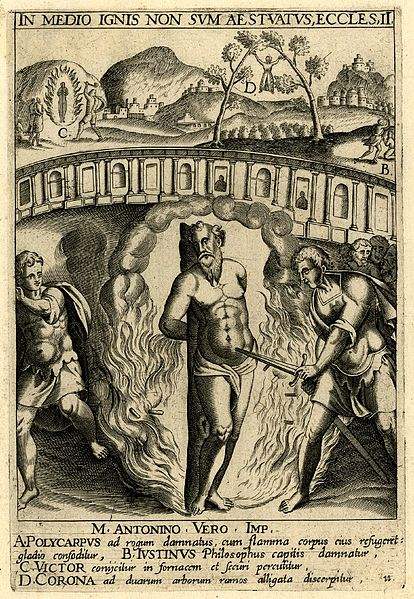 150 – A beginning of the discussion on the difference in the observance between Rome and the east – “The difference came into discussion first on a visit of Polycarp, bishop of Smyrna, to Anicetus, bishop of Rome, between A.D. 150 and 155. It was not settled; yet the two bishops parted in peace” – Philip Schaff
170 – “A few years afterwards, about A.D. 170, the controversy broke out in Laodicea, but was confined to Asia, where a difference had arisen either among the Quartodecimans themselves, or rather among these and the adherents of the Western observance. ” – Philip Schaff – History Of The Christian Church https://ccel.org/ccel/schaff/hcc2/hcc2.v.vii.iv.html
160-170 – Melito of Sardis delivers his Peri Pascha (on the Passover), said to be a Christian Passover version of a Haggadah of Pesach.
190 -200 – According to Eusebius, in the last decade of the 2nd century a number of synods were convened to deal with the controversy – Eusebius 1890, Book V Chapter 23
186-195 – Polycrates stirs up Victor, overseer of Rome, by getting a ‘multitude’ of believers in the East to sign on to his strongly worded letter on the passover in 186-195 AD. and gets himself and them “wholly excommunicate” by Victor, overseer of Rome.– Eusebius 1890, Book V Chapter 24 https://ccel.org/ccel/schaff/npnf201/npnf201.iii.x.xxv.html
When Polycrates, in about 190AD, addressed the controversy in a letter to Victor, he makes it sound like the believers and the ‘overseers’ in the East were celebrating the Passover as instructed in the Bible.
” All these [previously listed eastern overseers back to the apostles Philip & John, also Polycarp] observed the fourteenth day of the Passover according to the Gospel, deviating in no respect, but following the rule of faith. And I also, Polycrates, the least of you all, do according to the tradition of my relatives, some of whom I have closely followed. For seven of my relatives were bishops; and I am the eighth. And my relatives always observed the day when the people put away the leaven. “
Possibly what they did was celebrate the festival of unleaven bread as observed by Jesus, Peter, John, and Paul, as commanded in God’s Word.
For Polycrates goes on to say:
“For those greater than I have said ‘We ought to obey God rather than man.’”
325 – Constantine has the bishops outlaw fourteenthers.
340 – Eusebius dies possibly believing that the fourteenther controversy has been settled.
341 – The Synod of Antioch, 341, excommunicated Quartodecimans.
350 ca – Saint Patrick born in Scotland to a Quartodeciman Deacon.
+- 400 – John Chrysostom deprived those who follow the Biblical calendar of their ‘churches’ (assemblies?) – “Having therefore among other matters deprived many of the Novatians and Quartodecimans of their churches, he[John Chrysostom] returned to Constantinople.” – Socrates of Constantinople 1890, Book 6, Chapter 11. https://ccel.org/ccel/schaff/npnf202/npnf202.ii.ix.xii.html#fnf_ii.ix.xii-p5.1
595 – Augustine is sent by the roman ‘overseer’ to convert the Celtic Christians to his doctrine. The dating of the resurrection was a primary concern. – Bede https://www.ccel.org/ccel/bede/history.html
590-615 – St. Columbanus (sometimes known as Columba the Younger) flourished between 590 and 615, establishing monasteries in Gaul and Italy. In 603 he was expelled from Gaul by the mainstream bishops there for being a Quartodeciman and his unwillingness to accept episcopal authority..
664 – A major coup in the roman church’s invasion of Britain – the synod of Whitby is held in Northumbria in 664, wherein king Oswiu ruled that his kingdom would calculate the resurrection and observe the monastic tonsure according to the customs of Rome rather than the customs practiced by Irish monks at Iona .
“Bishop Colmán defended the Ionan calculation of the resurrection on the grounds that it was the practice of Columba, founder of their monastic network and a saint of unquestionable holiness, who himself had followed the tradition of St. John the apostle and evangelist.
Wilfrid defended the roman position on the following grounds (according to Bede’s narrative):
-
- It was the practice in Rome, where the apostles Saints Peter and Paul had “lived, taught, suffered, and are buried”.
- It was the universal practice of the Church, even as far as Egypt.
- The customs of the apostle John were particular to the needs of his community and his age and, since then, the Council of Nicaea had established a different practice.
- Columba had done the best he could considering his knowledge, and thus his irregular practice is excusable, but the Ionan monks at present did not have the excuse of ignorance.
- Whatever the case, no one has authority over Peter (and thus his successors, the bishops of Rome).”– Stevens, Wesley M. (2014). “Easter Controversy”
Do you agree with Polycrates and Peter and the apostles, “We ought to obey God rather than man.”?
When should we observe Jesus’ death and resurrection?
Footnotes:
THE REFERENCES TO THE TIME AND PLACE OF THE CRUCIFIXION IN THE “PERI PASCHA” OF MELITO OF SARDIS Urban C. von Wahlde – https://www.jstor.org/stable/23971590
On Pascha by Melito of Sardis Alistair C. Stewart (Translator) – http://sachurch.org/wp-content/uploads/2017/04/On-Pascha-Melito-of-Sardis.pdf
Columbanus, ‘Letter’ 1 Translation and Commentary Robert Stanton – https://www.jstor.org/stable/45019365
by RandyC

Saint Patrick: Fourteenther
March 17, 2024 in Just Thinking...
Saint Patrick was a Fourteenther
It seems that all of the well known lore about Patrick of the British Isles was made up many centuries after he was gone. The Christianity that he spread had no resemblance or connection to the government run mainstream church in southern europe.
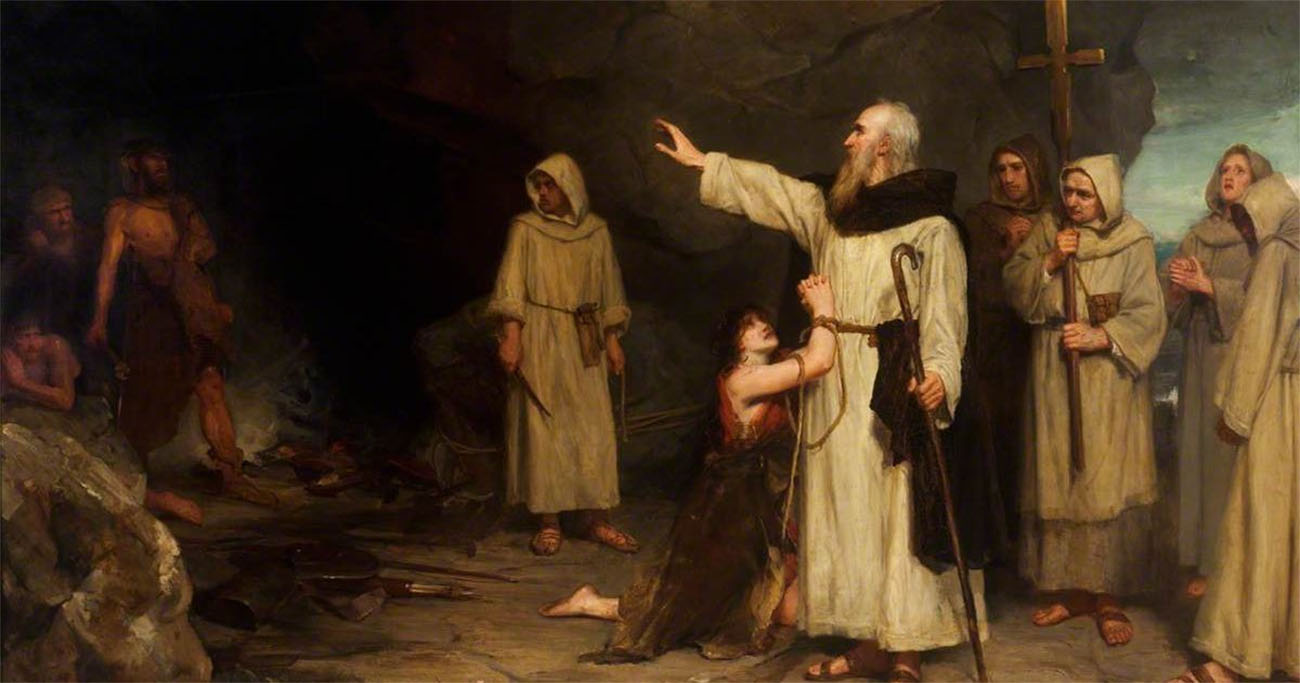 Before the anglo saxon invasion in the early 400s, all of England, Scotland and Ireland were Celtic. Patrick was not Irish, he was born in the mid 300s in Bonnaven[Banavan], Scotland into a Christian family, his father was a deacon and his grandfather a presbyter. When he was 16 years old, he was captured and taken as a slave to Ireland, after six years he escaped. Ten years later he returned to spread the Celtic Gospel to the heathens in Ireland that had been his en-slavers.
The Fourteenthers under Constantine
In 325 Constantine called the first Nicaean council, one of the agenda items was the setting of the date of what he called easter. He did not want to follow the Levitical calendar by using the fourteenth of the first month to remember the passion of Jesus, it seems because of his supposed antisemitism. Supposed, because how do we know what his real motivations may have been, they say that he continued to worship the sun gods until his death, so perhaps that was why he wanted to use that date for his festivities?
But the debate over whether or not to use the Biblical calendar to figure out the date to remember the savior’s resurrection had been going on for quite a while before Constantine started using his government to enforce his doctrine.
The Fourteenthers in the Second Century
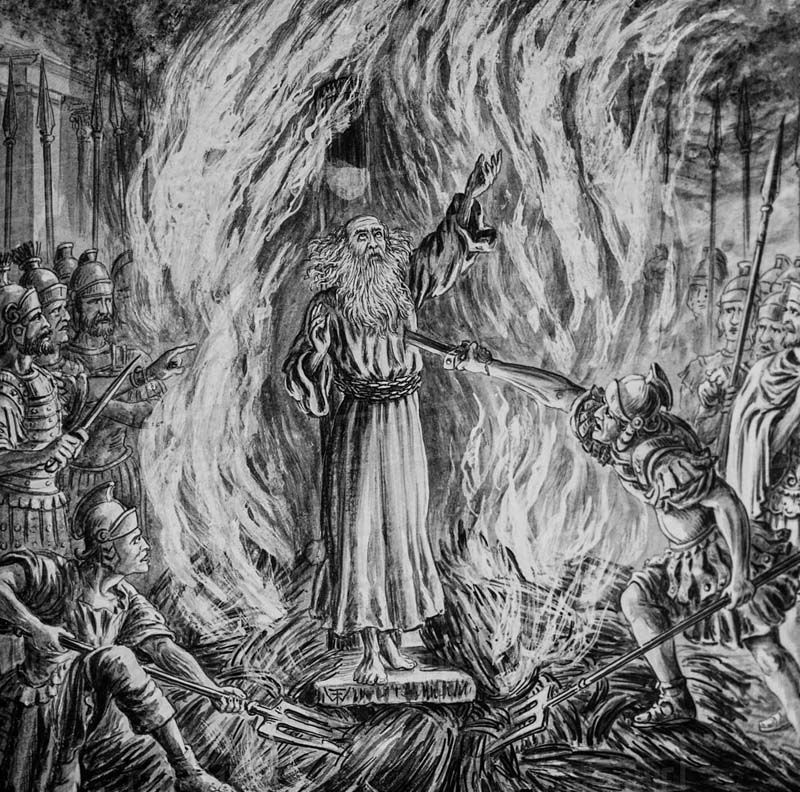 In 166 Polycarp, the bishop of Smyrna was burned at the stake for refusing to worship the emperor? Polycarp was a staunch ‘fourteenther’. When he visited the ‘overseer’ of Rome, Anicetus, they discussed the dating of easter and agreed to disagree. How could Anicetus argue with Polycarp who studied under the beloved apostle John, and had each year remembered the last supper with John on the fourteenth day of the first month, as John had done his entire life.
And Today?
This year the fourteenth day of the first month by biblical reckoning will fall out over 3 weeks after the date that easter has been placed on the roman calendar.
The question is, why does the mainstream church, still to this day, not remember Jesus’ resurrection on the date proscribed in God’s Word?
Has it always been a matter of antisemitism? Is it still ?
Footnotes:
The ancient British and Irish churches including the life and labors of St. Patrick by Cathcart, William, 1826-1908 – https://archive.org/details/ancientbritishir00cath/
St Patrick’s Writings: Confessio and Epistola – https://www.confessio.ie/more/article_kelly#
The history of the Christian religion and Church during the three first centuries by Neander, August, 1789-1850 – https://archive.org/details/historyofthechur02neanuoft
When Heresy was Orthodox: Quartodecimanism as a Brief Case Study by Justin L. Daneshmand, PhD Candidate (Univ. of Manchester) – https://www.christianorigins.div.ed.ac.uk/2018/03/30/when-heresy-was-orthodox-quartodecimanism-as-a-brief-case-study/
Wisconsin Lutheran College – Fouth Century Christianity https://www.fourthcentury.com/council-of-nicaea-ad-325/
Eusebius Church History https://ccel.org/ccel/schaff/npnf201.iii.x.xxv.html#fna_iii.x.xxv-p22.1
by RandyC

Be not wise in your own eyes, for wisdom comes from the Lord
January 15, 2024 in Just Thinking...
 And God gave Solomon wisdom, exceedingly deep insight, and understanding beyond measure, like the sand on the seashore. – Kings 1
These are the proverbs of Solomon son of David, king of Israel, for gaining wisdom and discipline, for comprehending words of insight, and for receiving instruction in wise living and in righteousness, justice, and equity. – Proverbs 1
My son, do not forget my teaching,
But let your heart keep my commandments;
For length of days and years of life
And peace they will add to you.
Do not let kindness and truth leave you;
Bind them around your neck,
Write them on the tablet of your heart.
So you will find favor and good repute
In the sight of God and man.
Trust in Yehovah with all your heart
And do not lean on your own understanding.
In all your ways acknowledge Him,
And He will make your paths straight.
Do not be wise in your own eyes;
Fear Yehovah and turn away from evil.
It will be healing to your body
And refreshment to your bones. – Proverbs 3
For Yehovah gives wisdom;
From His mouth comes knowledge and understanding.
He stores up sound wisdom for the upright;
He is a shield to those who walk in integrity,
Guarding the paths of justice,
And He preserves the way of His godly ones.
Then you will discern righteousness and justice
And equity and every good course.
For wisdom will enter your heart
And knowledge will be pleasant to your soul;
Discretion will guard you,
Understanding will watch over you,
To deliver you from the way of evil,
From the man who speaks perverse things;
From those who leave the paths of uprightness. – Proverbs 2
by RandyC

And Your God Shall be My God
June 5, 2022 in Just Thinking...
Now it came about in the days when the judges judged, that there was a famine in the land. And a certain man of Bethlehem in Judah went to sojourn in the land of Moab with his wife and his two sons. The name of the man was Elimelech, and the name of his wife, Naomi; and the names of his two sons were Mahlon and Chilion—Ephrathites of Bethlehem in Judah. Now they entered the land of Moab and remained there. Then Elimelech, Naomi’s husband, died; and she was left with her two sons. They took for themselves Moabite women as wives; the name of the one was Orpah and the name of the other Ruth. And they lived there about ten years. Then both Mahlon and Chilion also died, and the woman was bereft of her two children and her husband.
Then she arose with her daughters-in-law that she might return from the land of Moab, for she had heard in the land of Moab that Jehovah had remembered His people and gave them bread. So she departed from the place where she was, and her two daughters-in-law with her; and they went on the way to return to the land of Judah. And Naomi said to her two daughters-in-law, “Go, return each of you to her mother’s house. May Jehovah deal kindly with you as you have dealt with the dead and with me. May Jehovah grant that you may find rest, each in the house of a husband.” Then she kissed them, and they lifted up their voices and wept. And they said to her, “No, but we will surely return with you to your people.” But Naomi said, “Return, my daughters. Why should you go with me? Have I yet sons in my womb, that they may be your husbands? Return, my daughters! Go, for I am too old to have a husband. If I said I have hope, if I should even have a husband tonight and also bear sons, would you therefore wait until they were grown? Would you therefore refrain from marrying? No, my daughters; for it is harder for me than for you, for the hand of Jehovah has gone forth against me.”
And they lifted up their voices and wept again; and Orpah kissed her mother-in-law, but Ruth cleaved to her.
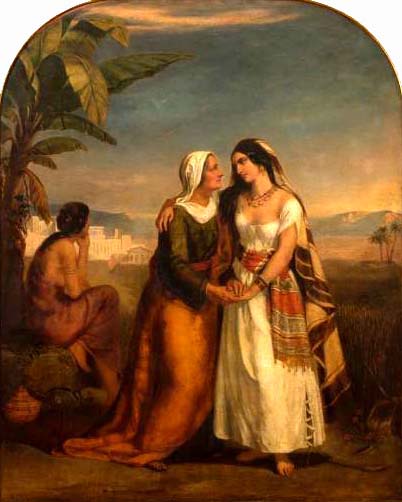 Then she said, “Behold, your sister-in-law has gone back to her people and her gods; return after your sister-in-law.” But Ruth said, “Do not urge me to leave you or turn back from following you; for where you go, I will go, and where you lodge, I will lodge. Your people shall be my people, and your God, my God. Where you die, I will die, and there I will be buried. Thus may Jehovah do to me, and worse, if anything but death parts you and me.” When she saw that she was determined to go with her, she said no more to her.
So they both went until they came to Bethlehem. And when they had come to Bethlehem, all the city was stirred because of them, and the women said, “Is this Naomi?” She said to them, “Do not call me Naomi; call me Mara, for the Almighty has dealt very bitterly with me. I went out full, but Jehovah has brought me back empty. Why do you call me Naomi, since Jehovah has testified against me and the Almighty has afflicted me?”
So Naomi returned, and with her Ruth the Moabitess, her daughter-in-law, who returned from the land of Moab. And they came to Bethlehem at the beginning of barley harvest.
Now Naomi had a kinsman of her husband, a man of great wealth, of the family of Elimelech, whose name was Boaz. And Ruth the Moabitess said to Naomi, “Please let me go to the field and glean among the ears of grain after one in whose sight I may find favor.” And she said to her, “Go, my daughter.” So she departed and went and gleaned in the field after the reapers; and she happened to come to the portion of the field belonging to Boaz, who was of the family of Elimelech. Now behold, Boaz came from Bethlehem and said to the reapers, “May Jehovah be with you.” And they said to him, “May Jehovah bless you.” Then Boaz said to his servant who was in charge of the reapers, “Whose young woman is this?” The servant in charge of the reapers replied, “She is the young Moabite woman who returned with Naomi from the land of Moab. And she said, ‘Please let me glean and gather after the reapers among the sheaves.’ Thus she came and has remained from the morning until now; she has been sitting in the house for a little while.”
Then Boaz said to Ruth, “Listen carefully, my daughter. Do not go to glean in another field; furthermore, do not go on from this one, but stay here with my maids. Let your eyes be on the field which they reap, and go after them. Indeed, I have commanded the young men not to touch you. When you are thirsty, go to the water jars and drink from what the young men draw.” Then she fell on her face, bowing to the ground and said to him, “Why have I found favor in your sight that you should take notice of me, since I am a foreigner?” Boaz replied to her, “All that you have done for your mother-in-law after the death of your husband has been fully reported to me, and how you left your father and your mother and the land of your birth, and came to a people that you did not previously know. May Jehovah reward your work, and your wages be full from Jehovah, the God of Israel, under whose wings you have come to seek refuge.” Then she said, “I have found favor in your sight, my lord, for you have comforted me and indeed have spoken kindly to your maidservant, though I am not so much as one of your maidservants.”
At mealtime Boaz said to her, “Come here, that you may eat of the bread and dip your piece of bread in the vinegar.” So she sat beside the reapers; and he served her roasted grain, and she ate and was satisfied and had some left. When she rose to glean, Boaz commanded his young men, saying, “Let her glean even among the sheaves, and do not insult her. And you shall let fall also some of the handfuls on purpose for her, and leave them, that she may glean, and do not rebuke her.”
So she gleaned in the field until evening. Then she beat out what she had gleaned, and it was about an ephah of barley. She took it up and went into the city, and her mother-in-law saw what she had gleaned. She also took it out and gave Naomi what she had left after she was satisfied. Her mother-in-law then said to her, “Where did you glean today and where did you work? May he who took notice of you be blessed.” So she told her mother-in-law with whom she had worked and said, “The name of the man with whom I worked today is Boaz.” Naomi said to her daughter-in-law, “May he be blessed of Jehovah who has not withdrawn his kindness to the living and to the dead.” Again Naomi said to her, “The man is our relative, he is one of our closest relatives.” Then Ruth the Moabitess said, “Furthermore, he said to me, ‘You should stay close to my young men until they have finished all my harvest.’” Naomi said to Ruth her daughter-in-law, “It is good, my daughter, that you go out with his maids, so that others do not fall upon you in another field.” So she stayed close by the maids of Boaz in order to glean until the end of the barley harvest and the wheat harvest. And she lived with her mother-in-law.
Then Naomi her mother-in-law said to her, “My daughter, shall I not seek rest for you, that it may be well with you? Now is not Boaz our kinsman, with whose maids you were? Behold, he winnows barley at the threshing floor tonight. Wash yourself therefore, and anoint yourself and put on your best clothes, and go down to the threshing floor; but do not make yourself known to the man until he has finished eating and drinking. It shall be when he lies down, that you shall notice the place where he lies, and you shall go and uncover his feet and lie down; then he will tell you what you shall do.” She said to her, “All that you say I will do.”
So she went down to the threshing floor and did according to all that her mother-in-law had commanded her. When Boaz had eaten and drunk and his heart was merry, he went to lie down at the end of the heap of grain; and she came secretly, and uncovered his feet and lay down. It happened in the middle of the night that the man was startled and bent forward; and behold, a woman was lying at his feet. He said, “Who are you?” And she answered, “I am Ruth your maid. So spread your covering over your maid, for you are a close relative.” Then he said, “May you be blessed of Jehovah, my daughter. You have shown your last kindness to be better than the first by not going after young men, whether poor or rich. Now, my daughter, do not fear. I will do for you whatever you ask, for all my people in the city know that you are a woman of excellence. Now it is true I am a close relative; however, there is a relative closer than I. Remain this night, and when morning comes, if he will act as redeemer, good; let him redeem you. But if he does not wish to act as redeemer for you, then I will redeem you, as Jehovah lives. Lie down until morning.”
So she lay at his feet until morning and rose before one could recognize another person; and he said, “Let it not be known that the woman came to the threshing floor.” Again he said, “Give me the cloak that is on you and hold it.” So she held it, and he measured six measures of barley and laid it on her. Then she went into the city. When she came to her mother-in-law, she said, “How did it go, my daughter?” And she told her all that the man had done for her. She said, “These six measures of barley he gave to me, for he said, ‘Do not go to your mother-in-law empty-handed.’” Then she said, “Wait, my daughter, until you know how the matter turns out; for the man will not rest until he has settled it today.”
Now Boaz went up to the gate and sat down there, and behold, the close relative of whom Boaz spoke was passing by, so he said, “Turn aside, friend, sit down here.” And he turned aside and sat down. He took ten men of the elders of the city and said, “Sit down here.” So they sat down. Then he said to the closest relative, “Naomi, who has come back from the land of Moab, has to sell the piece of land which belonged to our brother Elimelech. So I thought to inform you, saying, ‘Buy it before those who are sitting here, and before the elders of my people. If you will redeem it, redeem it; but if not, tell me that I may know; for there is no one but you to redeem it, and I am after you.’” And he said, “I will redeem it.” Then Boaz said, “On the day you buy the field from the hand of Naomi, you must also acquire Ruth the Moabitess, the widow of the deceased, in order to raise up the name of the deceased on his inheritance.” The closest relative said, “I cannot redeem it for myself, because I would jeopardize my own inheritance. Redeem it for yourself; you may have my right of redemption, for I cannot redeem it.”
 Now this was the custom in former times in Israel concerning the redemption and the exchange of land to confirm any matter: a man removed his sandal and gave it to another; and this was the manner of attesting in Israel. So the closest relative said to Boaz, “Buy it for yourself.” And he removed his sandal. Then Boaz said to the elders and all the people, “You are witnesses today that I have bought from the hand of Naomi all that belonged to Elimelech and all that belonged to Chilion and Mahlon. Moreover, I have acquired Ruth the Moabitess, the widow of Mahlon, to be my wife in order to raise up the name of the deceased on his inheritance, so that the name of the deceased will not be cut off from his brothers or from the court of his birth place; you are witnesses today.” All the people who were in the court, and the elders, said, “We are witnesses. May Jehovah make the woman who is coming into your home like Rachel and Leah, both of whom built the house of Israel; and may you achieve wealth in Ephrathah and become famous in Bethlehem. Moreover, may your house be like the house of Perez whom Tamar bore to Judah, through the offspring which Jehovah will give you by this young woman.”
So Boaz took Ruth, and she became his wife, and he went in to her. And Jehovah gave her conception, and she gave birth to a son. Then the women said to Naomi, “Blessed is Jehovah who has not left you without a redeemer today, and may his name become famous in Israel. May he also be to you a restorer of life and a sustainer of your old age; for your daughter-in-law, who loves you and is better to you than seven sons, has given birth to him.”
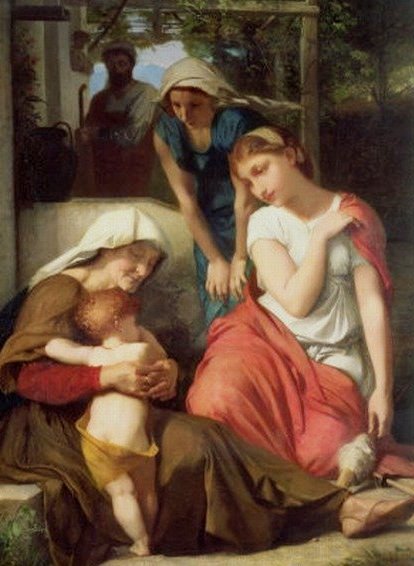 Then Naomi took the child and laid him in her lap, and became his nurse. The neighbor women gave him a name, saying, “A son has been born to Naomi!” So they named him Obed; he was the father of Jesse, the father of David.
Now these are the generations of Perez: to Perez was born Hezron, and to Hezron was born Ram, and to Ram, Amminadab, and to Amminadab was born Nahshon, and to Nahshon, Salmon, and to Salmon was born Boaz, and to Boaz, Obed, and to Obed was born Jesse, and to Jesse, David.
by RandyC

by RandyC

There is Hope – “Yësh Teek-vaH”
February 14, 2021 in Sharing Favorite Christian Music
One of my new favorite singers, Benny Friedman, like Bob Dylan, he is a Jew from Minnesota!
I discovered his worship music about 2 or 3 weeks before the covid panic hit. I didn’t it realize until a couple months into the lock-down, how the message and the lyric of this song really addressed what people in the bigger cities were feeling.
Please enjoy these lyrics and feel some joy.
Yesh Tikvah Lyrics
Look around, far and near
Where’s the joy, where’s the cheer
Why the fear, why the frown
Why the smile upside down
Shake yourself from the dust
Scrape your soul from the rust
Know that this too shall pass
For in G-d we trust
There is hope
If we sing our hope together
We have faith that is stronger than the terror
No despair, no dismay
Everything will be okay
He is with us night and day
Brother dear
Dry your tears
Take my hand, never fear
Let’s advance, side by side
And let’s cast our fright aside
Don’t forget all the love
That we have from Above
And you’ll see with the dawn
All the pain will be gone
Composed by Ari Goldwag Lyrics by Miriam Israeli, Ari Goldwag Arranged by Ian Freitor
Translation by Rabbi Eli Friedman Special thanks to Simche Friedman
by RandyC

HalleluJah ~ Words Mean Things
August 31, 2020 in Sharing Favorite Christian Music, Words Mean Things
One of our new favorite music videos is a 60’s song that uses the phrase “Hallelujah” perfectly, I think.
In the past few years I learned that I have been singing in Hebrew my whole life! How cool.
הללו יה ~ halelu-yah ~ Praise Jah
I saw many translations that make the phrase “Praise to Yah!” or “Praise You, Yah!” but at this point I am convinced it is merely “Praise Yah!”, not that there is any difference.
Jah, being a shortened poetic form of Jehovah that I guess David made up? (for some reason English Bible printers in the mid-17th century started using the letter “J” to spell God’s proper name.)
A Quote from Wikipedia says
“hallelujah” means more than simply “praise Jah” or “praise Yah”, as the word hallel in Hebrew means a joyous praise in song, to boast in God.” – George Fohrer. Hebrew and Aramaic Dictionary of the Old Testament, under הלל. Walter de Gruyter, 1973
Since King David started singing the phrase 3,000 years ago, it sure has become popular.
Who Will Answer?
Lei and I recently discovered a video of a song by Ed Ames that brings back memories of our childhood. We remember him as a odd indian named “Mingo” from Daniel Boone on TV. He was originally the star of the Ames brothers singing group and in 1968 his solo song “Who Will Answer?” reached #19 on Billboard’s Top 100.
The 1960’s
But we just love this video, whoever put it together did an wonderful job of illustrating the lyrics and the 1960’s:
Who Will Answer? – Check out the awesome lyrics below
Hallelujah! Hallelujah!, Hallelujah!
From the canyons of the mind,
We wander on and stumble blindly
Through the often-tangled maze
Of starless nights and sunless days,
While asking for some kind of clue
Or road to lead us to the truth,
But who will answer?
Side by side two people stand,
Together vowing, hand-in-hand
That love’s imbedded in their hearts,
But soon an empty feeling starts
To overwhelm their hollow lives,
And when they seek the hows and whys,
Who will answer?
On a strange and distant hill,
A young man’s lying very still.
His arms will never hold his child,
Because a bullet running wild
Has struck him down. And now we cry,
“Dear God, Oh, why, oh, why?”
But who will answer?
High upon a lonely ledge,
A figure teeters near the edge,
And jeering crowds collect below
To egg him on with, “Go, man, go!”
But who will ask what led him
To his private day of doom,
And who will answer?
[Chorus:]
If the soul is darkened
By a fear it cannot name,
If the mind is baffled
When the rules don’t fit the game,
Who will answer? Who will answer? Who will answer?
Hallelujah! Hallelujah!, Hallelujah!
In the rooms of dark and shades,
The scent of sandalwood pervades.
The colored thoughts in muddled heads
Reclining in the rumpled beds
Of unmade dreams that can’t come true,
And when we ask what we should do,
Who… Who will answer?
‘Neath the spreading mushroom tree,
The world revolves in apathy
As overhead, a row of specks
Roars on, drowned out by discotheques,
And if a secret button’s pressed
Because one man has been outguessed,
Who will answer?
Is our hope in walnut shells
Worn ’round the neck with temple bells,
Or deep within some cloistered walls
Where hooded figures pray in halls?
Or crumbled books on dusty shelves,
Or in our stars, or in ourselves,
Who will answer?
If the soul is darkened
By a fear it cannot name,
If the mind is baffled
When the rules don’t fit the game,
Who will answer? Who will answer? Who will answer?
Hallelujah! Hallelujah!, Hallelujah!