

Saint Patrick was a Fourteenther
It seems that all of the well known lore about Patrick of the British Isles was made up many centuries after he was gone. The Christianity that he spread had no resemblance or connection to the government run mainstream church in southern europe.
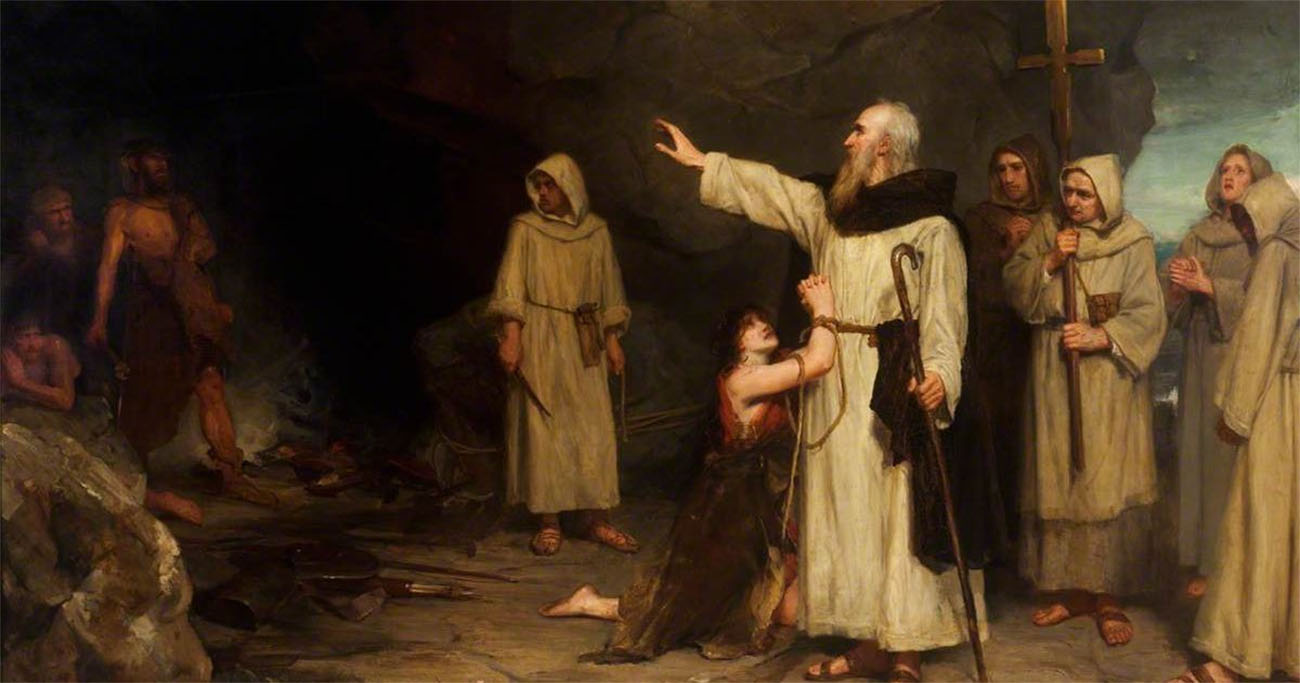 Before the anglo saxon invasion in the early 400s, all of England, Scotland and Ireland were Celtic. Patrick was not Irish, he was born in the mid 300s in Bonnaven[Banavan], Scotland into a Christian family, his father was a deacon and his grandfather a presbyter. When he was 16 years old, he was captured and taken as a slave to Ireland, after six years he escaped. Ten years later he returned to spread the Celtic Gospel to the heathens in Ireland that had been his en-slavers.
The Fourteenthers under Constantine
In 325 Constantine called the first Nicaean council, one of the agenda items was the setting of the date of what he called easter. He did not want to follow the Levitical calendar by using the fourteenth of the first month to remember the passion of Jesus, it seems because of his supposed antisemitism. Supposed, because how do we know what his real motivations may have been, they say that he continued to worship the sun gods until his death, so perhaps that was why he wanted to use that date for his festivities?
But the debate over whether or not to use the Biblical calendar to figure out the date to remember the savior’s resurrection had been going on for quite a while before Constantine started using his government to enforce his doctrine.
The Fourteenthers in the Second Century
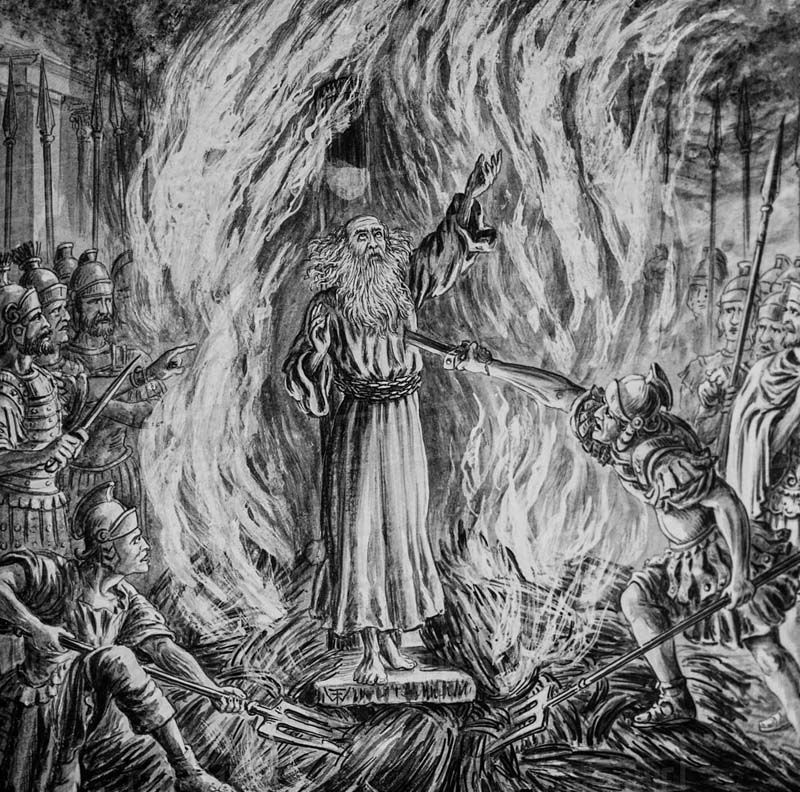 In 166 Polycarp, the bishop of Smyrna was burned at the stake for refusing to worship the emperor? Polycarp was a staunch ‘fourteenther’. When he visited the ‘overseer’ of Rome, Anicetus, they discussed the dating of easter and agreed to disagree. How could Anicetus argue with Polycarp who studied under the beloved apostle John, and had each year remembered the last supper with John on the fourteenth day of the first month, as John had done his entire life.
And Today?
This year the fourteenth day of the first month by biblical reckoning will fall out over 3 weeks after the date that easter has been placed on the roman calendar.
The question is, why does the mainstream church, still to this day, not remember Jesus’ resurrection on the date proscribed in God’s Word?
Has it always been a matter of antisemitism? Is it still ?
Footnotes:
The ancient British and Irish churches including the life and labors of St. Patrick by Cathcart, William, 1826-1908 – https://archive.org/details/ancientbritishir00cath/
St Patrick’s Writings: Confessio and Epistola – https://www.confessio.ie/more/article_kelly#
The history of the Christian religion and Church during the three first centuries by Neander, August, 1789-1850 – https://archive.org/details/historyofthechur02neanuoft
When Heresy was Orthodox: Quartodecimanism as a Brief Case Study by Justin L. Daneshmand, PhD Candidate (Univ. of Manchester) – https://www.christianorigins.div.ed.ac.uk/2018/03/30/when-heresy-was-orthodox-quartodecimanism-as-a-brief-case-study/
Wisconsin Lutheran College – Fouth Century Christianity https://www.fourthcentury.com/council-of-nicaea-ad-325/
Eusebius Church History https://ccel.org/ccel/schaff/npnf201.iii.x.xxv.html#fna_iii.x.xxv-p22.1


Comments