

The great Quartodeciman controversy, whether to remember Jesus on the 14th of the first month* or on a Sunday after the equinox. (*The 25th of March was the first day of the year in England, Wales, Ireland and British America, until 1752)
Note: Much of this timeline has been pieced together from early writings from 150-800AD.
The translations done by Philip Schaff in the mid-1880s are said to be the best available of the early writings. In his footnotes he uses the English word ‘easter’ to translate the Greek word π€σχα (pascha G3957) which is a transliteration of the Hebrew word פֶסַח (pesach H6453) which in English is passover.
Therefore we need to read Philip Schaff’s translation and his footnotes with the idea that he is coming from a tradition that may make it difficult for him to be objective.
Timeline of the Quartodeciman Controversy
0-29 – Each year Jesus goes with his family to Jerusalem on pilgrimage for the festival of Passover.
Now His parents went to Jerusalem every year at the Feast of the Passover. And when He became twelve, they went up there according to the custom of the Feast; and as they were returning, after spending the full number of days, the boy Jesus stayed behind in Jerusalem. (Luk 2:41-43)
30 or 33 – Jesus looks forward to celebrating the Passover with his followers, but ends up being the sacrifice when the romans kill him. (1Cor 5:7)
70-73 – The siege and destruction of Jerusalem, including the destruction of The House of Jehovah by the romans.
70 – The Sanhedrin is moved to Yavne, by the Rabbis with the destruction of the Temple.
70 – Flight to Pella – It is said that the Jewish Christians in Jerusalem, the Nazoraeans, were warned by prophecy before the war to depart and to go dwell in Pella of the Decapolis. — Eusebius & Epiphanius
106-107 – Ignatius, the Patriarch of Antioch martyred – “Ignatius was most probably one of Quartodecimans, this would result from the fact of occupying the capital city of Asia Minor, which was one of the last agreeing for discontinuation of quartodeciman practice.” — Abucewicz Krzysztof. (2014). Paths of quartodeciman Pascha in the letters of Ignatius of Antioch, “Slaskie Studia Historyczno-Teologiczne” z. 2 (2014), s. 267-279
115-125 – Possibly the beginning of equinox observance ?? The Roman custom was observed, according to Irenaeus, since at least the time of roman overseer Xystus (reign 115–25) – Eusebius 1890, Book V Chapter 24 https://ccel.org/ccel/schaff/npnf201/npnf201.iii.x.xxv.html
132-135 – Bar Kokhba revolt – Hadrian sends the roman legions to destroy all of Judea, they demolish all 50 Jewish fortresses and 985 villages.
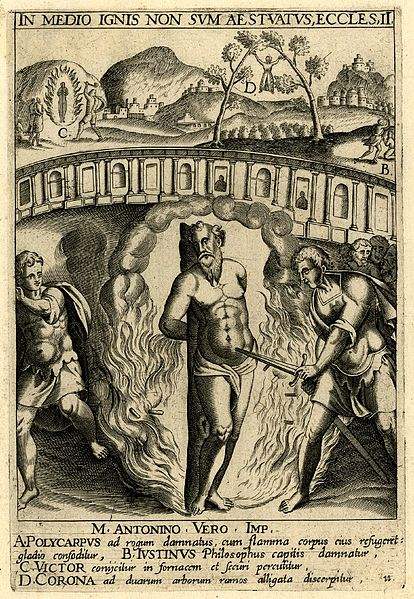 150 – A beginning of the discussion on the difference in the observance between Rome and the east – “The difference came into discussion first on a visit of Polycarp, bishop of Smyrna, to Anicetus, bishop of Rome, between A.D. 150 and 155. It was not settled; yet the two bishops parted in peace” – Philip Schaff
170 – “A few years afterwards, about A.D. 170, the controversy broke out in Laodicea, but was confined to Asia, where a difference had arisen either among the Quartodecimans themselves, or rather among these and the adherents of the Western observance. ” – Philip Schaff – History Of The Christian Church https://ccel.org/ccel/schaff/hcc2/hcc2.v.vii.iv.html
160-170 – Melito of Sardis delivers his Peri Pascha (on the Passover), said to be a Christian Passover version of a Haggadah of Pesach.
190 -200 – According to Eusebius, in the last decade of the 2nd century a number of synods were convened to deal with the controversy – Eusebius 1890, Book V Chapter 23
186-195 – Polycrates stirs up Victor, overseer of Rome, by getting a ‘multitude’ of believers in the East to sign on to his strongly worded letter on the passover in 186-195 AD. and gets himself and them “wholly excommunicate” by Victor, overseer of Rome.– Eusebius 1890, Book V Chapter 24 https://ccel.org/ccel/schaff/npnf201/npnf201.iii.x.xxv.html
When Polycrates, in about 190AD, addressed the controversy in a letter to Victor, he makes it sound like the believers and the ‘overseers’ in the East were celebrating the Passover as instructed in the Bible.
” All these [previously listed eastern overseers back to the apostles Philip & John, also Polycarp] observed the fourteenth day of the Passover according to the Gospel, deviating in no respect, but following the rule of faith. And I also, Polycrates, the least of you all, do according to the tradition of my relatives, some of whom I have closely followed. For seven of my relatives were bishops; and I am the eighth. And my relatives always observed the day when the people put away the leaven. “
Possibly what they did was celebrate the festival of unleaven bread as observed by Jesus, Peter, John, and Paul, as commanded in God’s Word.
For Polycrates goes on to say:
“For those greater than I have said ‘We ought to obey God rather than man.’”
325 – Constantine has the bishops outlaw fourteenthers.
340 – Eusebius dies possibly believing that the fourteenther controversy has been settled.
341 – The Synod of Antioch, 341, excommunicated Quartodecimans.
350 ca – Saint Patrick born in Scotland to a Quartodeciman Deacon.
+- 400 – John Chrysostom deprived those who follow the Biblical calendar of their ‘churches’ (assemblies?) – “Having therefore among other matters deprived many of the Novatians and Quartodecimans of their churches, he[John Chrysostom] returned to Constantinople.” – Socrates of Constantinople 1890, Book 6, Chapter 11. https://ccel.org/ccel/schaff/npnf202/npnf202.ii.ix.xii.html#fnf_ii.ix.xii-p5.1
595 – Augustine is sent by the roman ‘overseer’ to convert the Celtic Christians to his doctrine. The dating of the resurrection was a primary concern. – Bede https://www.ccel.org/ccel/bede/history.html
590-615 – St. Columbanus (sometimes known as Columba the Younger) flourished between 590 and 615, establishing monasteries in Gaul and Italy. In 603 he was expelled from Gaul by the mainstream bishops there for being a Quartodeciman and his unwillingness to accept episcopal authority..
664 – A major coup in the roman church’s invasion of Britain – the synod of Whitby is held in Northumbria in 664, wherein king Oswiu ruled that his kingdom would calculate the resurrection and observe the monastic tonsure according to the customs of Rome rather than the customs practiced by Irish monks at Iona .
“Bishop Colmán defended the Ionan calculation of the resurrection on the grounds that it was the practice of Columba, founder of their monastic network and a saint of unquestionable holiness, who himself had followed the tradition of St. John the apostle and evangelist.
Wilfrid defended the roman position on the following grounds (according to Bede’s narrative):
-
- It was the practice in Rome, where the apostles Saints Peter and Paul had “lived, taught, suffered, and are buried”.
- It was the universal practice of the Church, even as far as Egypt.
- The customs of the apostle John were particular to the needs of his community and his age and, since then, the Council of Nicaea had established a different practice.
- Columba had done the best he could considering his knowledge, and thus his irregular practice is excusable, but the Ionan monks at present did not have the excuse of ignorance.
- Whatever the case, no one has authority over Peter (and thus his successors, the bishops of Rome).”– Stevens, Wesley M. (2014). “Easter Controversy”
Do you agree with Polycrates and Peter and the apostles, “We ought to obey God rather than man.”?
When should we observe Jesus’ death and resurrection?
Footnotes:
THE REFERENCES TO THE TIME AND PLACE OF THE CRUCIFIXION IN THE “PERI PASCHA” OF MELITO OF SARDIS Urban C. von Wahlde – https://www.jstor.org/stable/23971590
On Pascha by Melito of Sardis Alistair C. Stewart (Translator) – http://sachurch.org/wp-content/uploads/2017/04/On-Pascha-Melito-of-Sardis.pdf
Columbanus, ‘Letter’ 1 Translation and Commentary Robert Stanton – https://www.jstor.org/stable/45019365


Comments